
2026 NBA Mock Drafts

| # | Team | Player | Pos | |||
|---|---|---|---|---|---|---|
| 1 |
 |
AJ Dybantsa | SF | |||
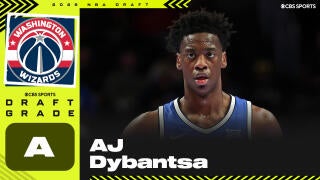 If the Wizards have made a choice between Dybantsa and Peterson, they've yet to show their hand. There would be no real strategic value in doing so as that would discourage any potential trade proposals. So, while we still wait and see on the official word, I continue to believe that Dybantsa is the most likely choice here. He's got ideal size, measurables and physical tools for an NBA wing, will be a day one scorer in the NBA, and still has plenty of room to keep taking his game to new levels with the progression of his three-point shooting, handle, and defense. |
||||||
| 2 |
 |
Darryn Peterson | PG | |||
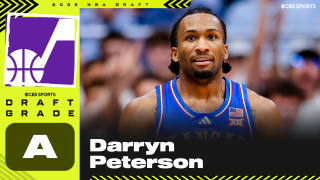 This would be a choice between Peterson and Boozer, and the former is both a better fit and probably has a higher long-term upside. With the frontcourt rebuilt this year, you can slot Peterson next to Keyonte George and essentially have rebuilt your roster. Boozer is the other option in this scenario, and while they may be able to figure out ways to pair him, Jaren Jackson, and Lauri Markannen together, that's probably not a long-term trio. The third scenario is that Peterson goes No. 1, in which case Dybantsa would be the pick here and the entire state of Utah would rejoice. |
||||||
| 3 |
 |
Cameron Boozer | PF | |||
 This is essentially weighing whoever is left – Boozer or Peterson – vs. Wilson. In either case, the former makes the most sense. Boozer is the highest-floor prospect in the draft with an unmatched combination of size, skill, physicality, and basketball IQ. He's also very much in line with the type of player that Memphis has prioritized in the draft process in recent years. If Peterson were to be available, he would give them a high-upside swing in the backcourt a replacement for Ja Morant, whose days in Memphis appear numbered. |
||||||
| 4 |
 |
Caleb Wilson | PF | |||
 The Bulls have been as busy as anyone in the pre-draft process, working out numerous projected lottery picks. Darius Acuff, Keaton Wagler, Mikel Brown, Kingston Flemings, Nate Ament, Karim Lopez, Yaxel Lendeborg, and Morez Johnson have all been in, and yet most consider Wilson a fairly obvious choice here. He's the most explosive athlete in the draft, was farther along than expected offensively, and has a wealth of untapped defensive potential. The Bulls are also rumored to be interested in adding a second top-ten pick, which is where one of the point guards would likely be targeted. |
||||||
| 5 |
 |
Keaton Wagler | PG | |||
 Of the four one-and-done freshman point guards, Wagler is the easiest to pair with Darius Garland. Mikel Brown Jr. is getting some significant late traction here as well, but simultaneously, there are whispers that his medical might not be completely clean. Whether or not that's legitimate or a smoke screen remains to be seen. The Clippers have also worked out Flemings, Ament, Lendeborg, and Brayden Burries, but those scenarios are more likely if they were to trade down in the lottery and add some future draft assets in the process to protect against the potential penalties Aspiration investigation. |
||||||
| 6 |
 |
Darius Acuff Jr. | PG | |||
 There's been a lot of reporting around Brown here as well, and the Nets have definitely been doing extreme due diligence on him. But if they go with a lead guard (because they drafted two last year in Ben Saraf and Nolan Traore), Acuff gives the Nets the type of offensive alpha they don't yet have. It's also worth noting that while Wagler opted not to work out in Brooklyn, and is already off the board in this scenario, he would match the emphasis on positional size and feel that we saw dominate the Nets' draft philosophy last year. Nate Ament has also been linked to Brooklyn, but now that appears more likely only if they trade back, something they've reportedly been willing to entertain. |
||||||
| 7 |
 |
Mikel Brown Jr. | PG | |||
 Of all the teams in the 5-8 pick range, Sacramento is the one most in need of a point guard, so they are likely to choose from whoever is available. Acuff is presumed to be the Kings' favorite, and he would reportedly welcome being in Sacramento. There's been speculation they could swap with Brooklyn to get him, or conversely, that they could flip No. 7 into a pair of firsts, potentially with OKC being a trade partner. If Brown is the pick, he gives them a high-upside late-blooming lead guard. But, it's also possible that both he and Acuff are off the board, meaning Wagler could unexpectedly slide. Aday Mara and Nate Ament are viewed as additional possibilities, particularly if Sacramento moves down. |
||||||
| 8 |
 |
Kingston Flemings | PG | |||
 There are three schools of thought here. One, find your point guard of the future. Two, solidify your center position. Three, trade the pick. Chicago, Memphis, and OKC could all be looking to move into the top 10 and be potential trade partners. Quinn Snyder may favor Aday Mara, after reportedly advocating for Donovan Clingan two years ago, only for the organization to take Zaccharie Risacher (who was virtually unplayable in the playoffs this year). If it's a point guard, Flemings would give them a high-level athlete and two-way lead guard with a high floor. It's also conceivable he could be off the board to Sacramento, and Brown available here. It's also worth noting that Atlanta has had Yaxel Lendeborg in, although he's viewed as less likely at this point. |
||||||
| 9 |
 |
Brayden Burries | SG | |||
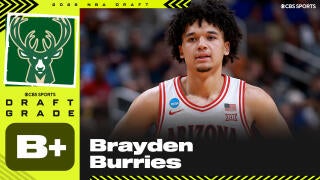 Burries has been my pick here since the very beginning and while it's possible someone is intrigued earlier, there continues to be very little information on him taking other visits. It is worth noting that Dallas has hosted a variety of point guards, and if one of them were to slip (which would happen if Mara or Ament moves up), then things could change here. As it stands, the team appears committed to Kyrie Irvinig for now and Burries fits a more critical positional need at the two, giving them another two-way player to grow alongside Cooper Flagg. The news that Dallas has hired Michigan's Dusty May doesn't necessary change the board here for the Mavericks, but it does provide more insight into Wolverine prospects like Aday Mara, Yaxel Lendeborg and Morez Johnson. Still, Burries remains the mostly likely pick here for Dallas. |
||||||
| 10 |
 |
Nate Ament | PF | |||
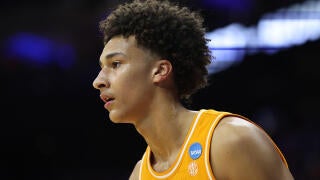 If Giannis Antetokounmpo gets traded and the Bucks enter rebuilding mode, Ament gives them a high-upside combo-forward who they'll be able to develop. Multiple reports have also pointed out the connection between owner Jimmy Haslam and Tennessee, as his family is a major booster for the university. Other options here include a point guard (although the freshmen should all be off the board here) or a big man like Aday Mara or Hannes Steinbach. |
||||||
| 11 |
 |
Aday Mara | C | |||
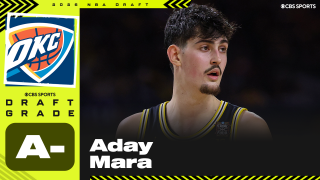 Mara has been linked to a number of teams higher in the lottery, including the Clippers (presumably if they trade back) and Hawks. The Warriors are the team he is most frequently connected to and one of the only places he is confirmed to have visited. Mara would give the Warriors a rim protector, vertical spacer, and passer capable of thriving in Steve Kerr's system. Yaxel Lendeborg has been frequently mentioned as an option here while other players perceived to be in play include Burries (if he's on the board), Steinbach, Morez Johnson, and Karim Lopez. Bennett Stirtz, Labaron Philon, and Cameron Carr have all worked out within the last few days. |
||||||
| 12 |
 |
Yaxel Lendeborg | PF | |||
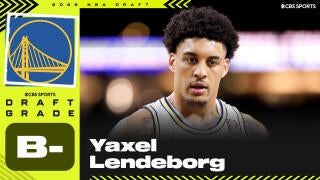 OKC likely needs to shed more salary, even after offloading Aaron Wiggins to Atlanta, and simultaneously retool a roster that fell just short of Wemby's Spurs. That means picks No. 12 and No. 17 are on the market, whether that be in a consolidation trade or to punt those picks down the road for future assets. Aaron Wiggins is perceived to be available to teams that can absorb his salary, and then OKC has to decide whether to pick up Lu Dort's option. That means the wing is the place with the most uncertainty, so if they keep the pick, Lendeborg's two-way versatility could make sense. Johnson and Ament have also been in to work out. Steinbach could be an option, and Lopez might make sense if he was open to staying abroad for another year. This is also the highest I've heard Dailyn Swain's name. |
||||||
| 13 |
 |
Hannes Steinbach | PF | |||
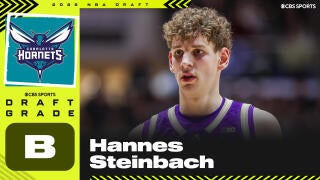 This would serve two different purposes. One, if Miami keeps the pick, they are in need of frontcourt depth. Two, if they make the Giannis trade and this goes to Milwaukee, the Bucks have reportedly done a lot of due diligence on Steinbach and could pair him with Ament as two multi-positional frontcourt pieces. Johnson and Philon also check both of those boxes. Lendeborg is an option if he's on the board. Mara has not publicly visited Miami, but he'd fit, and so he could be in the mix as well. |
||||||
| 14 |
 |
Morez Johnson Jr. | PF | |||
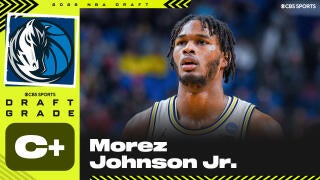 This was viewed as an aggressive projection coming out of the combine; now it's possible Johnson is no longer on the board. He'd fit a need for the Hornets, both from a positional standpoint as well as with his physicality. Lendeborg and Steinbach could be options if they're on the board. Mara is a bit redundant with Ryan Kalkbrenner, but if he were to slip, Charlotte might grab him anyway. Philon has been mentioned here, both straight-up and in a potential trade (Minnesota being a rumored partner after they recently hosted Philon). Other possibilities on the perimeter include Swain and Christian Anderson. |
||||||
| 15 |
|
Cameron Carr | SG | |||
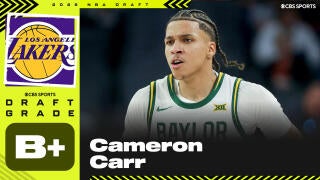 The Bulls are rumored to be interested in swapping this pick, with additional assets, for a spot in the top ten. If they keep it, it's hard to project because they've hosted such a wide range of prospects. Lendeborg, Johnson, and Steinbach (who is reportedly a favorite of new head coach Tiago Splitter) would all be strong options if available. If not, the list of options includes Lopez, Philon, Anderson, Stritz, Chris Cenac, Ebuka Okorie, and Jayden Quaintance. Carr gives them the physical tools that new president of basketball operations Bryson Graham covets, along with the shooting range to match. |
||||||
| 16 |
|
Labaron Philon | PG | |||
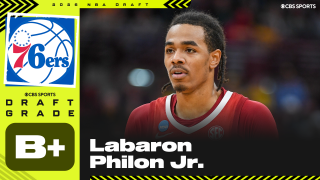 Like the Bulls, the Grizzlies are also reportedly interested in acquiring a second top-10 pick, and theoretically pairing Boozer with one of those freshman lead guards. If that doesn't come to fruition, and they get Boozer instead of Peterson at three, they could choose from that next tier of guards here, including Philon, Christian Anderson, Bennett Stritz, and Ebuka Okorie. If Philon isn't already off the board, he gives them a dynamic scorer who attacks with pace, has worked his way into a shot-maker, and showed more defensive chops as a freshman. |
||||||
| 17 |
|
Dailyn Swain | SF | |||
 I've heard the Thunder could consider Swain as high as No. 14. He's a high-upside big wing who puts pressure on the rim, has all the tools to blossom into an elite defender, and significant upside if he proves to be more of a primary creator. The questions are the shooting and the high turnover rate. Lopez could be an option here too, especially if OKC doesn't have any other deals to help make their numbers meet and needs to stash one of these picks internationally. Stritz, Quaintance, and Allen Graves have been linked to OKC as well. |
||||||
| 18 |
|
Christian Anderson | PG | |||
|
If Charlotte keeps both picks and goes with a frontcourt player at No, 14, I expect they'll take a guard here. Swain and Philon would both be possibilities if they were on the board. If not, Anderson and Stritz have both been in. Anderson may be the best shooter in the draft, and while he's similar to what they already have (skilled shooters who are questionable defenders), he would fill the void left by Coby White's anticipated departure in free agency. If they go with a guard early, Graves and Koa Peat are both among the perceived options. |
||||||
| 19 |
 |
Allen Graves | PF | |||
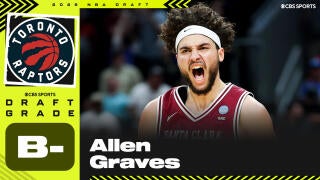 Graves left at least five million dollars on the table in NIL money to stay in the draft, and so it's perceived that he has, if not a promise, at least a strong indication he could go near the middle of the first round. Speculation begins with Charlotte, but also includes Toronto, San Antonio, and Philadelphia, three teams that need frontcourt shooting. Carr, Stritz, Anderson, and maybe even Meleek Thomas could be options here too. |
||||||
| 20 |
 |
Karim Lopez | PF | |||
 Lopez could be off the board much higher than this. While he's not exactly what the Spurs need in terms of floor spacing, they've shown a willingness to prioritize other things in the draft process. Lopez has the physical strength, projectable frame, and potential positional versatility to be very appealing. Other frontcourt prospects like Graves, Cenac, Tarris Reed, and Zuby Ejiofor are believed to have worked out. Quaintance would be very intriguing next to Wemby as well. |
||||||
| 21 |
 |
Bennett Stirtz | PG | |||
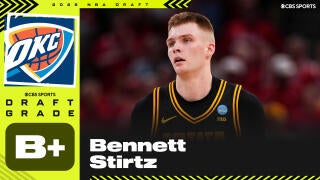 Labaron Philon, Christian Anderson, and Stirtz could shake out in almost any order. The Pistons are likely to be intrigued by all three, since any of them could add to the spacing around Cade Cunningham and give them an immediate initiator for their second unit. The Pistons have also done an extreme amount of due diligence into Okorie. Shooters like Thomas or Isaiah Evans are possibilities as well. |
||||||
| 22 |
 |
Chris Cenac Jr. | PF | |||
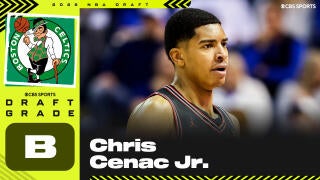 Cenac has size, measurables, defensive versatility, and inside-out offensive tools to develop. He was a high-volume rebounder this year and answered questions about his motor in the process. He would fit a positional need for Philly at the four and be able to play some spot minutes behind Joel Embiid at the five. Graves and Swain are certainly options if they're on the board. Philadelphia has also been linked to Peat, Evans, and Ejiofor. |
||||||
| 23 |
|
Koa Peat | PF | |||
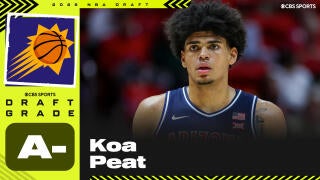 The Hawks are believed to be open to suitors at both No. 8 and No. 23, but if they keep both, they're likely to go with a frontcourt player in one spot and a perimeter player in the other. If they take Flemings, or another guard at No. 8, then the likes of Reed, Ejiofor, and Peat should all be options here (as well as Cenac and Graves if they were available). Peat's stock has slid a bit, because of questions surrounding his shooting and mixed reviews from some workouts, but his impact on winning is well-documented; he's great in the short-roll and could be well utilized alongside a stretch-five like Onyeka Okongwu. |
||||||
| 24 |
 |
Tarris Reed Jr. | C | |||
 Fresh off its NBA championship, owner James Dolan says they won't break the second apron. If that means they're unable to retain Mitchell Robinson, they'll almost assuredly have to look for a big here. It will also need to be a big who can play right away, so questions about Quaintance's medical might disqualify him. That could make Reed or Ejifor the most likely candidates. Reed has NBA caliber positional size, length, power, athleticism, maybe more face-up skill than he gets credit for, and some defensive versatility to match. If they feel like they can retain Robinson, then a shooter like Evans or Thomas could be a possibility. |
||||||
| 25 |
 |
Jayden Quaintance | C | |||
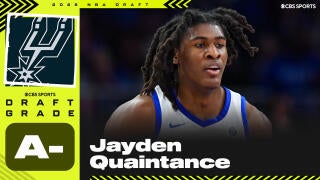 Henri Veesaar could make a lot of sense as a true stretch-five here. Reed and Ejiford have also been in, along with Cenac. Okorie is a possibility if they go for another guard, and Isaiah Evans is a possibility if they look for floor-spacing. I would advocate for Quaintance though, even if it means some additional rehab, so long as there are no long-term structural issues. We're talking about a lottery talent, one of the best athletes in the draft, and a potential defensive savant. A healthy Quaintance could finally give the Lakers their long-term solution up front. The Lakers also said to be very enamored with Philon, but would have to move up to get him. |
||||||
| 26 |
 |
Ebuka Okorie | PG | |||
 The Pistons, Grizzlies, and Wolves have done the most work on Okorie, but Denver has a real need for a paint touch point guard, especially as Nikola Jokic begins to age and they are forced to explore other ways of creating offense. Ejiofor has reportedly been to Denver as well. Veesaar would fit their system; Reed would be another potential backup five if he were available, and Isaiah Evans and Meleek Thomas could provide floor spacing. |
||||||
| 27 |
 |
Isaiah Evans | SG | |||
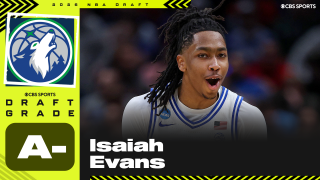 Evans was one of 24 players to receive an invitation to the green room, which means that he's likely to hear his name called in the first round. His niche is his three-point shooting, and no one values floor-spacing more than a Joe Mazzulla-coached Celtics team. Thomas could also be an option here, for a similar rationale. Sergio De Larrea has also been mentioned. Reed and Ejiofor have reportedly been in for workouts, while Veesaar would check both boxes, size and shooting. Boston is also very open to trade opportunities this cycle as well. |
||||||
| 28 |
 |
Zuby Ejiofor | C | |||
|
The Robert Dillingham experiment didn't go well in Minnesota, but the intrigue remains with that archetype. Trading up for Philon is a real possibility here for Minnesota, and Okorie isn't expected to get past here. The Wolves have also been involved with the Giannis sweepstakes, and if they end up having to trade someone like Rudy Gobert, they'll suddenly need depth up front with Joan Beringer taking on a bigger role right away and the brute force and physicality of Ejifor providing a gritty backup. |
||||||
| 29 |
 |
Meleek Thomas | SG | |||
|
With Darius Garland getting switched out for James Harden last season, the Cavs suddenly could use an infusion of young playmaking. Thomas is an instant-offense type shot-maker and microwave scorer when he's hot. Veesaar and De Larrea could also be options here, as could a trade to move off this guaranteed salary slot if a team in the second round is looking to move up. |
||||||
| 30 |
|
Joshua Jefferson | PF | |||
|
Jefferson is a strong-bodied four-man who is an outstanding passer and has great defensive instincts. He would add to a growing two-way core that Dallas would be building with Flagg and Burries. Ejiofor and Baba Miller could be possibilities here as well after both visited Dallas in the pre-draft process. |
||||||

| # | Team | Player | Pos | |||
|---|---|---|---|---|---|---|
| 1 |
|
Darryn Peterson | PG | |||
|
This pick should come down to Peterson or Dybantsa. The Wizards can't go wrong with either prospect. Like I've said for the last calendar year, I strongly believe that Peterson is the best player in the class. It might be a shocker to some if Peterson goes here, but I personally think he is a better fit in Washington than Utah. |
||||||
| 2 |
|
AJ Dybantsa | SF | |||
|
The Jazz would have their vision fulfilled when Dybantsa arrived to the state of Utah as a high school senior at Utah Prep if he is available here. If Peterson is off the board, Dybantsa would be the most logical pick at 2. It's hard to see Utah passing on him. |
||||||
| 3 |
|
Cameron Boozer | PF | |||
|
Boozer had one of the best one-and-done seasons in college basketball history at Duke and would add playmaking, rebounding and scoring to Memphis. Boozer has almost become underrated this draft cycle. He would be the clear-cut No. 1 pick in most draft classes. |
||||||
| 4 |
|
Caleb Wilson | PF | |||
|
The Bulls have the easiest decision to make on draft night. Whatever prospect of the "Big Four" is available, that's the pick. Wilson to Chicago seems like one of the most likely pairings on draft night. Wilson has untapped potential on the offensive end of the floor and would add athleticism and defense to a franchise looking for a 1A-type player. |
||||||
| 5 |
|
Keaton Wagler | PG | |||
|
For me, this is where the draft starts. The Clippers can swing the draft by taking any of the point guards projected in this range. In this mock, the Clippers take Wagler, who led Illinois to the Final Four as a freshman. This is also the spot where the first big trade of the night could happen if the Clippers are confident someone like Brayden Burries would be there in the later portion of the lottery. |
||||||
| 6 |
|
Mikel Brown Jr. | PG | |||
|
Brown missed time at Louisville last season due to a back injury. If he's healthy and the medicals are clean, he has a chance to be the best point guard in this draft. Brooklyn needs talent after having a lackluster draft despite making five first round picks last summer. Brown checks those boxes. |
||||||
| 7 |
|
Darius Acuff Jr. | PG | |||
|
The worst kept secret in the NBA Draft is the Kings admiration for Acuff. Kings general manager Scott Perry coached his father in the 1990s when he was the coach at Eastern Kentucky. Acuff, in my opinion, is the best true point guard in the draft. He can be an offensive engine in the NBA. That's exactly what Sacramento needs. There has been a lot of talk about Sacramento potentially trading up to secure Acuff. I'll believe it when I see it. |
||||||
| 8 |
|
Kingston Flemings | PG | |||
|
The Hawks, in this scenario, will likely be deciding between Mara or Flemings. In this mock, the Hawks take Flemings, who can be an immediate two-way impact as a rookie. |
||||||
| 9 |
|
Aday Mara | C | |||
|
Mock Trade from: OKC We have a trade! Oklahoma City trades up to No. 9 with Dallas (for picks 12/17) to secure Mara after the Hawks pass on him. Mara was one of the best shot blockers in college basketball last season and would add depth to the center position for one of the league's deepest rosters. |
||||||
| 10 |
|
Nate Ament | PF | |||
|
In this mock draft, we projected Giannis to be traded to the Heat. The Bucks own this pick already and use it to draft Ament, who is one of the biggest boom-or-bust prospects in the class. Ament showed signs of improvement throughout his freshman season at Tennessee but there are question marks about his efficiency after shooting less than 40% from the field last season. |
||||||
| 11 |
|
Yaxel Lendeborg | PF | |||
|
In my last mock draft, I had the Warriors taking Morez Johnson Jr. In this one, I have Golden State taking his frontcourt mate, Yaxel Lendeborg. Lendeborg, in my opinion, is a clear-cut top 10 player in the class. Yes, there are concerns about his draft age but he is exactly the kind of player Golden State should be targeting in the draft. |
||||||
| 12 |
|
Brayden Burries | SG | |||
|
Mock Trade from: DAL In the first of three first round picks Dallas makes in this mock, it selects Burries out of Arizona. In this scenario, that would be a massive home run. Dallas should be considering drafting Burries at 9 if he's still on the board. If the Mavericks can pick up an extra asset and still secure their guy, it would be a big win. |
||||||
| 13 |
|
Hannes Steinbach | PF | |||
|
Mock Trade from: MIL Another trade! The Bucks use their second first-round pick (after trading Giannis away in this mock trade) to draft a center of the future. Steinbach has some of the best hands in college basketball and was a double-double machine during his time at Washington. |
||||||
| 14 |
|
Morez Johnson Jr. | PF | |||
|
The Hornets appear to be in the center market this offseason. Although Johnson isn't a center, he would add size and versatility to Charlotte's frontcourt. Johnson exploits mismatches on offense and can guard multiple positions on the defensive end of the floor. |
||||||
| 15 |
|
Cameron Carr | SG | |||
|
After playing just 41 minutes total last season at Tennessee, Carr transferred to Baylor, where he blossomed into the Bears' leading scorer. He averaged 18.9 points on 49.4/37.4/80.1 shooting splits. His offensive upside is worth the swing here. |
||||||
| 16 |
|
Christian Anderson | PG | |||
|
After taking a forward at pick No. 3, the Grizzlies take their point guard of the future. Anderson is one of the best shooters in the class. Sixty-five of Anderson's 108 3-point shots were non-catch-and-shoot makes, which showcases his ability to create his own shot. This is a spot where you would imagine teams call Memphis to gauge a trade down opportunity. |
||||||
| 17 |
|
Karim Lopez | PF | |||
|
Mock Trade from: DAL With Dallas' second pick acquired in the trade with Oklahoma City, it adds more size to the roster by drafting Lopez. He is the only International player I've had in all my mocks. The International class just isn't as deep as previous seasons. Lopez's draft range appears to be somewhere in the late lottery or the early 20s. |
||||||
| 18 |
|
Labaron Philon | PG | |||
|
Traded from: MIN Another trade! It was reported earlier this week that Philon conducted a visit with Minnesota, which is interesting because the lone pick Minnesota holds is at No. 28 and the Alabama star is projected to be off the board before then. If Minnesota is confident in Philon, it would be logical to see them trade up for him. Two years ago, the Timberwolves were aggressive in the draft and traded two picks to move up to No. 8 to draft Rob Dillingham. That experiment didn't work out, but maybe this one will. |
||||||
| 19 |
|
Ebuka Okorie | PG | |||
|
Okorie is one player who will go higher than expected. He was one of the best scorers in college basketball, and his ability to attack the rim as a guard is special. The Raptors could be in the market for a big man, but taking the BPA also makes sense. |
||||||
| 20 |
|
Koa Peat | PF | |||
|
The biggest need for the Spurs heading into the offseason is finding a true 4 to play next to Victor Wembanyama. Peat would make sense in that regard. Although his jumper is a work in progress, he would be a great culture fit with the Spurs. Peat has been a winner at almost every stop in his basketball journey, which is exactly what San Antonio should be targeting. |
||||||
| 21 |
|
Allen Graves | PF | |||
|
Graves is an analytic darling. He didn't post eye-popping numbers at Santa Clara, but his advanced numbers told a different story. He could've returned to college basketball and cashed in on a huge NIL payday. Instead, he will capitalize on the hype and stay in the draft. Graves should join Jalen Williams and Brandin Podziemski as the latest first-round pick to come out of Santa Clara in the last five drafts. |
||||||
| 22 |
|
Isaiah Evans | SG | |||
|
Peat is someone who has been connected to the 76ers throughout the draft cycle. If he's off the board, I see the 76ers going BPA. Evans went from almost strictly a pure catch-and-shoot 3-point specialist at Duke during his freshman year to a legit No. 2 scoring option on the No. 1 overall seed in college basketball. Evans almost doubled the amount of 3-pointers he took from this year to last and still knocked them down at a 36.1% clip. |
||||||
| 23 |
|
Chris Cenac Jr. | PF | |||
|
After taking Flemings at No. 8, Atlanta adds a big man who has untapped potential because of his frame, athleticism and motor. Cenac is going to be a very impactful player in the league if he lands in the right situation. |
||||||
| 24 |
|
Meleek Thomas | SG | |||
|
The reigning NBA champions could target a big man with this pick. However, one player who makes sense is Thomas. I could see him being a very valuable and impactful scorer off the bench for the Knicks as the franchise chases a repeat. |
||||||
| 25 |
|
Jayden Quaintance | C | |||
|
The Lakers biggest need heading into the offseason should be finding a center. If Quaintance is still on the board, that should be the pick. He is one of the most unique prospects in this class. After playing in just four games at Kentucky last season, his stock has taken a hit. Still, when healthy, he is one of the best defenders in the class. |
||||||
| 26 |
|
Dailyn Swain | SF | |||
|
I could see Swain going much higher than 26 on draft night because of how thin the wing class is. Swain was productive in his lone season at Texas and has the upside to be a two-way player in the NBA. |
||||||
| 27 |
|
Joshua Jefferson | PF | |||
|
This is the first time Jefferson has cracked the first round of my mocks this cycle. The Iowa State big man is a very skilled passer and will be an impactful role player at the next level. It wouldn't be surprising to see him land somewhere at the end of the first round or with the first few picks of the second. |
||||||
| 28 |
|
Zuby Ejiofor | C | |||
|
Mock Trade from: CHA Ejiofor has a strong case to go at the end of the first round. He was one of the best defenders in college basketball this past season. If Ejiofor doesn't hear his name called at the end of the first, he will be one of the first five picks of the second round. |
||||||
| 29 |
|
Bennett Stirtz | PG | |||
|
One of the point guards is bound to slide a bit on draft night. I could see that being Stirtz. The Iowa star has had an incredible rise from playing at the Division II level to being a likely first-round pick. This would be a BPA pick from the Cavs. |
||||||
| 30 |
|
Tarris Reed Jr. | C | |||
|
Reed had one of the most dominant NCAA Tournament runs of any big man in the modern era. He is a throwback big man who thrives in the post and causes havoc on the defensive end. He averaged a career-high 2.0 blocks per game in his final season of college basketball. |
||||||

| # | Team | Player | Pos | |||
|---|---|---|---|---|---|---|
| 1 |
|
AJ Dybantsa | SF | |||
|
Dybantsa has moved to -550 in the betting markets to be the first pick, which is even bigger odds than he had before some reports started connecting Washington to Peterson. There's probably a lesson in there somewhere. Either way, what the Wizards are getting is a jumbo-wing and natural scorer who led the EYBL in points per game after his freshman season of high school and the entire nation in points per game during his freshman season at BYU. Based on that trajectory, and Dybantsa's awesome physical tools, it will not be surprising if he also someday leads the NBA in scoring. His presence should make the Wizards interesting for the first time in a while. Alongside Trae Young and Anthony Davis, Dybantsa could help Washington reach the postseason next year for the first time since 2021. |
||||||
| 2 |
|
Darryn Peterson | PG | |||
|
As noted, I believe Peterson's theoretical ceiling is the highest of any player's in this draft. The talent is undeniable. But there are questions about whether he'll maximize his gifts because of the way his one season at Kansas unfolded. He was special in spots and at times looked like the best player in college basketball. But Peterson was also in and out of the lineup a lot -- sometimes by his own choice -- and that fact has raised concerns in some corners. Regardless, he won't have to wait long to hear his name called. Assuming it's by Utah, Peterson also shouldn't have to wait long to be in the playoffs, as the Jazz are positioned to compete in the West with a core of Peterson and former (but still young) All-Stars Lauri Markkanen and Jaren Jackson Jr.. |
||||||
| 3 |
|
Cameron Boozer | PF | |||
|
The Grizzlies have traded Desmond Bane and Jaren Jackson Jr. in the past year; Ja Morant is expected to go next. So the hope in Memphis is that the third pick in this draft delivers a new face of the franchise -- and, assuming he's available, it'll likely be Boozer. Given how the so-called Morant Era went off the rails with multiple suspensions before the franchise decided to pivot, selecting Boozer is the most sensible move here. All he's ever done is be awesome -- both on and off the court -- and win, win, win. If the Grizz grab him, their starting frontcourt on Opening Night should feature the 2023 and 2024 CBS Sports National Player of the Year (Zach Edey) and the 2026 CBS Sports National Player of the Year (Boozer). |
||||||
| 4 |
|
Caleb Wilson | PF | |||
|
Wilson to the Bulls is, in some people's eyes, the safest prediction in the top five, as he is widely viewed as the fourth-best prospect in a clear-cut top four. Great athlete. Terrific competitor. But Wilson is also a non-shooter headed to a league that values it, which is not ideal for a top-five pick. But the other stuff is too great to pass on. So, barring a twist, Wilson will play home games at the United Center. |
||||||
| 5 |
|
Keaton Wagler | PG | |||
|
The Clippers are an obvious candidate to trade down. And there are franchises reportedly trying to get into the top five. So don't be surprised if this pick gets moved. If it doesn't, though, Wagler makes a lot of sense as a jumbo lead guard who can play on or off the ball. Most importantly, the Clippers need a bigger guard beside Darius Garland, who is only 6-1 and under contract with Los Angeles for two more years, and Wagler is the tallest option among the guards expected to go in this range. |
||||||
| 6 |
|
Mikel Brown Jr. | PG | |||
|
The Nets took four guards in last year's draft, but none of them really did anything too encouraging as rookies for a 20-win team, which obviously isn't a great sign. Either way, that's my way of suggesting Brooklyn shouldn't hesitate to take a big swing on another guard here -- and the biggest swing they can take might be Brown, the one-and-done star from Louisville who was great when he played but limited to just 21 appearances because of a back issue. His best performance came in early February, when Brown made 10 3-pointers and finished with 45 points in a win over NC State. On that day, he looked like a top 10 pick. Tonight, he should be one. |
||||||
| 7 |
|
Darius Acuff Jr. | PG | |||
|
Acuff and the Kings have been connected publicly for weeks with most indications suggesting this is the floor for the reigning SEC Player of the Year who just became the first man to lead that conference in points and assists since Pete Maravich did it at LSU in 1970. Special talent. Fun player. Would it be better if he were taller? Yes. Would it be better if he weren't a negative-defender? Also yes. But the offensive skill-set is special, and the potential for stardom seems present. |
||||||
| 8 |
|
Kingston Flemings | PG | |||
|
The Hawks are in need of backcourt help after moving on from Trae Young last season. Flemings could provide it. The point guard prospect wasn't the highest-rated recruit in Houston's freshman class but emerged as the program's best player while helping the Cougars win 30 games and advance to the Sweet 16 of the NCAA Tournament. He's the rare 19 year-old who is both a top-tier athlete and strong shooter. It's not hard to imagine him helping a playoff team in Atlanta, even as a rookie. |
||||||
| 9 |
|
Brayden Burries | SG | |||
|
The Mavericks created a big headline on the eve of the draft by luring Dusty May from Michigan to be their next coach. I'd be surprised if it's not a successful partnership, and a part of that will be tied to how things go with this pick. For a while now, I've had Burries slotted here -- and I'll stick with that even if May's hire has caused some to speculate that Dallas could grab one of the players who just helped him guide the Wolverines to the national championship, as Morez Johnson and Aday Mara would both be reasonable options for the Mavericks given where they're picking and the plan in place to build around reigning NBA Rookie of the Year Cooper Flagg. Trading down is also an option believed to be under consideration. |
||||||
| 10 |
|
Nate Ament | PF | |||
|
It remains unclear which direction the Bucks are headed, but most indications are that Giannis Antetokounmpo is on the way out. If so, it'll be rebuild-time in Milwaukee, at which point taking a huge swing on Ament would be defensible. The wing with size had an up-and-down freshman season for the Vols -- but the upside isn't hard to spot. Less than a year ago, the 2025 McDonald's All-American was considered a possible top-five pick. So getting Ament here would be nice for a Bucks franchise that will likely finish outside of the top 10 in the East next season in the absence of their former MVP. |
||||||
| 11 |
|
Aday Mara | C | |||
|
Mara kind of splits the difference between a player ready to contribute and a prospect with plenty of room to grow, which makes the 21 year-old an obvious option for Golden State. In the Western Conference, the Warriors are now looking up at giants like Victor Wembanyama, Chet Holmgren and Rudy Gobert. So using this pick on a 7-3 center who can more or less look them eye-to-eye would be logical. Mara sees the floor well from way up there, passes effectively and finishes with both hands. But his real strength is on defense, where he blocked and altered shots all NCAA Tournament while helping the Wolverines win the national championship. |
||||||
| 12 |
|
Morez Johnson Jr. | PF | |||
|
Johnson shot above 60% from the field as one of the Big Ten's best players while helping the Wolverines win the national championship. Like his teammate slotted one spot higher, though, his real value is on the other end of the court, where the 20 year-old anchored college basketball's best defense in his one year at Michigan after transferring from Illinois. Some sources have suggested this is probably the floor for Johnson -- especially if Mara is already off the board and thus not an option for an OKC team that might need to replace Isaiah Hartenstein. |
||||||
| 13 |
|
Hannes Steinbach | PF | |||
|
Traded from: MIL The Bucks acquired this pick in the past 24 hours when they traded superstar Giannis Antetokounmpo to Miami for a package that also included Tyler Herro and Kel'el Ware. I have Milwaukee using the selection on Steinbach, the 20-year-old German who proved to be an elite rebounder on both ends in his one season at Washington. Let the rebuild begin. |
||||||
| 14 |
|
Yaxel Lendeborg | PF | |||
|
Lendeborg transferred from UAB to Michigan and was the best player on a team that won the NCAA Tournament one year after he didn't even win Player of the Year honors in the sport's 11th-best conference (American). Just an awesome story. That he's already 23 years old will turn some franchises off, and his big personality is something that's come up. But, if Lendeborg is available at No 14, none of that should bother a Charlotte franchise that won 44 games this season, especially when two of the team's best players are 23 (Brandon Miller) and 24 (LaMelo Ball). |
||||||
| 15 |
|
Cameron Carr | SG | |||
|
Carr emerged as a real top-20 option after transferring from Tennessee to Baylor and having one of the biggest breakout years in the sport while averaging 14.1 more points per game with the Bears than he averaged previously with the Vols. The 21-year-old has long arms and a solid-enough jumper. In this mock, he lands beside Wilson in Chicago as s major part of the Bulls' rebuild. |
||||||
| 16 |
|
Christian Anderson | PG | |||
|
There are reports that Memphis is trying to package this pick with other assets to acquire a second top-10 selection. That's my way of saying there's a decent chance the Grizz won't even make this pick. If they do, though, Anderson should be an option after going from an intriguing freshman at Texas Tech to one of the Big 12's stars and best prospects. The sophomore from Atlanta kept the Red Raiders relevant even after JT Toppin, the 2025 Big 12 Player of the Year, went down with a torn ACL in February. Anderson has been described as the best shooter in this class after making 41.5% of the 7.9 3-pointers he attempted this season. In theory, he could offset some of the shooting Memphis sent to Orlando when it traded Desmond Bane last summer. |
||||||
| 17 |
|
Karim Lopez | PF | |||
|
This is another spot where the team slotted to select here could change given the Thunder still have more picks than they probably want or need even after trading Aaron Wiggins to Atlanta this weekend. If the Thunder execute the pick, keep an eye on Lopez, as this is his perceived range. The 19 year-old is a physical wing from Mexico with lots of positives. If the 3-point shot comes around, and as long as he doesn't prove to be a liability on defense, Lopez would be a terrific snag here for an Oklahoma City franchise trying to figure out what's next after losing in the Western Conference Finals to the Spurs. |
||||||
| 18 |
|
Labaron Philon | PG | |||
|
Not every prospect who returns to college actually enhances his draft stock -- but Philon definitely did. The sophomore guard played more on-the-ball for Alabama than he did in the previous season, and the result was better assist numbers and a 3-point percentage that jumped to 39.9. The unusual amount of top-shelf lead guards available this year will push Philon down further than he'd go in most drafts, but that just makes him a value-pick at this point for the Hornets. |
||||||
| 19 |
|
Bennett Stirtz | PG | |||
|
It's rare for somebody to end up as a first-round pick after starting a college career at the Division II level, but Stirtz has a real chance to do it. Concerns about how he'll defend in the NBA are valid. But Stirtz is a lead guard with a good assist-to-turnover ratio and reliable jumper. High basketball IQ. All that stuff. If I were running a franchise, I wouldn't overthink this one. He can play and will be in the NBA for a long time. |
||||||
| 20 |
|
Allen Graves | PF | |||
|
Seemingly every year now there's an off-the-radar prospect who generates attention largely because of an interesting statistical profile. Graves is that player in this draft. The 6-9 forward was a zero-star prospect in the Class of 2025 but is now a 19 year-old near the top of analytics boards. His ability to make shots and rebound with a good body will secure him a guaranteed contract -- but Graves remains among the biggest mysteries for casual fans who simply didn't see him play much in college. |
||||||
| 21 |
|
Ebuka Okorie | PG | |||
|
Okorie's lack of size shouldn't be an issue in Detroit, where jumbo-guard Cade Cunningham can comfortably pair with smaller players in the backcourt. That alone should make Okorie among the options if he's still available here. The 19 year-old led the ACC in scoring and tallied at least 33 points five different times this season, including a career-high 40 in a win over Georgia Tech. If you like guards who can bounce it and get by people, Okorie is your guy. |
||||||
| 22 |
|
Tarris Reed Jr. | C | |||
|
If Mara helped himself more than any other prospect in the NCAA Tournament, Reed wasn't far behind him on the list. The UConn center averaged 19.5 points and 13.2 rebounds in the Big Dance while helping the Huskies reach the championship game. He's more of a traditional center than a modern center -- but that's OK in today's game. Traditional centers still hold value. And it's not like Joel Embiid is going to play forever in Philadelphia. |
||||||
| 23 |
|
Chris Cenac Jr. | PF | |||
|
Cenac will not be selected in this draft in a way that correlates with where he was ranked coming out of high school -- but he's still a likely first-round pick after starting for a Houston team that finished 30-7. Some have argued he should've done another year at Houston, and I get that. But there's little risk of Cenac slipping too far. If he develops quickly enough, the 19 year-old could crack the rotation in Atlanta, where they clearly need frontcourt depth if the goal is to finish in the top six in the East again. |
||||||
| 24 |
|
Henri Veesaar | C | |||
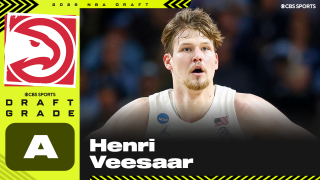 Michael Malone's first year at UNC would've been a lot simpler if he could've kept Veesaar in school, but the talented big decided to forgo his final year of eligibility in favor of a professional career. Did Veesaar leave money on the table with this move? Perhaps. But it's a move that made the draft deeper after other first-round prospects like Braylon Mullins and Thomas Haugh decided to remain in college, and the Knicks could be the franchise that benefits from it, especially if they are counting on losing Mitchell Robinson via unrestricted free agency. |
||||||
| 25 |
|
Isaiah Evans | SG | |||
|
Evans is a high-volume 3-point shooter with good positional size who made 38% of his shots from beyond the arc in two seasons with one of the best brands and teams in college basketball. That's a good place to start his evaluation. The 20-year-old wing could be a nice piece for a Lakers franchise still building around Luka Doncic. |
||||||
| 26 |
|
Koa Peat | PF | |||
|
Peat impacts winning in a variety of ways and was among the reasons Arizona won the Big 12's regular-season championship before advancing to the Final Four. Good size. Good body. Intriguing prospect. The issue is that he's a 6-7 wing who doesn't really shoot, evidence being that Peat only took 20 3-pointers in 36 games with the Wildcats. That's not ideal for the modern-NBA and why Peat's draft-range seems vast. Peat impacts winning in a variety of ways and was among the reasons Arizona won the Big 12's regular-season championship before advancing to the Final Four. Good size. Good body. Intriguing prospect. The issue is that he's a 6-7 wing who doesn't really shoot, evidence being that Peat only took 20 3-pointers in 36 games with the Wildcats. That's not ideal for the modern-NBA and why Peat's draft-range seems vast. |
||||||
| 27 |
|
Joshua Jefferson | PF | |||
|
Jefferson spent four years in college and went from a role player at Saint Mary's to a star at Iowa State, where he was an All-American this season while helping the Cyclones win 29 times. He's a big forward who just gets things done. High floor. High basketball IQ. If the perimeter shot gets more reliable, Jefferson would be a steal this deep in the first round of this draft. |
||||||
| 28 |
|
Jayden Quaintance | C | |||
|
Brooklyn secured this pick Monday by being willing to take Julius Randle out of Minnesota in what amounts to a salary dump of the former All-Star. I have them using the aquired asset on Quaintance, who was once a projected top-10 pick before a knee injury sidelined him for much of the past 17 months. If not for that, there's no way Quaintance would be available this deep in this draft. So Brooklyn might be wise to take a swing on the shot-altering big, especially considering he's oozing with potential and still only 18 years old. |
||||||
| 29 |
|
Zuby Ejiofor | C | |||
|
Ejiofor spent four years playing for two Hall of Fame coaches -- first Bill Self at Kansas, then Rick Pitino at St. John's -- and went from spending just 5.2 minutes per game on the court as a freshman to winning Big East Player of the Year honors as a senior. Awesome story. Is he undersized for a center? Definitely yes. But Ejiofor does have a 7-2 wingspan and great motor, and those two things, combined with a great reputation as a competitor and winner, are going to give him a chance to stick. |
||||||
| 30 |
|
Dailyn Swain | SF | |||
|
Swain followed his coach, Sean Miller, from Xavier to Texas and emerged as the Longhorns' leading scorer. The 20 year-old from Ohio is more of a driver than a shooter -- and he probably needs to become a better shooter to justify a first-round slot longterm. But there's definitely stuff here for Dallas to work with, starting with the fact that Swain is an explosive athlete who impacts things on both ends. |
||||||

| # | Team | Player | Pos | |||
|---|---|---|---|---|---|---|
| 1 |
|
AJ Dybantsa | SF | |||
|
Washington will continue to do its due diligence with Cameron Boozer and Darryn Peterson, but the AJ Dybantsa groundswell isn't disappearing anytime soon. Dybantsa has a chance to be one of the NBA's most terrifying transition scorers from the jump while doubling as an elite isolation scorer. That's special stuff. Leading the NBA in scoring is within the range of potential outcomes. Dybantsa's growth from an iffy playmaker to a good decision-maker is a strong indicator of what could be in store for a prospect who was self-aware enough to diagnose his flaws and do something about them. The 6-foot-9 wing put up ludicrous numbers at BYU, but the best is yet to come. Dybantsa is a worthy choice to become the face of the Wizards' franchise. |
||||||
| 2 |
|
Darryn Peterson | PG | |||
|
The Cameron Boozer buzz to Utah is not a smokescreen, but Darryn Peterson remains the choice at No. 2. Utah doesn't want to toil in mediocrity much longer. Peterson becoming a true difference-maker is the quickest way for Utah to become competitive, unless Danny Ainge and the Utah brain trust strongly believe that Boozer is on another tier than Peterson and they have a Lauri Markkanen or Walker Kessler trade up its sleeve that brings in a perimeter difference-maker. Those are big what-ifs. A core of Keyonte George, Darryn Peterson, Ace Bailey, Jaren Jackson Jr., Kessler and Markkanen can be a factor in the West next season. Peterson could become Utah's version of Devin Booker -- a rangy 6-foot-5 shot-maker who can toggle on or off the ball at a moment's notice. Peterson's jumper is so silky. He shot 38% from downtown and 43% on midrange jumpers despite having one of the toughest shot diets due to Kansas having little spacing and Peterson's inability to create a ton of separation. If Peterson can put his leg injuries in the past and rediscover the zoom-zoom burst we saw in high school at Prolific Prep, he can be the best player from this draft. |
||||||
| 3 |
|
Cameron Boozer | PF | |||
|
I've maintained that the 2026 NBA Draft is a Big Three, not a Big Four, which makes this pick awfully simple. Cameron Boozer should be the choice, and it'll go swimmingly. A Boozer-Zach Edey frontcourt just absolutely vaporizes opponents on the glass. That raises the floor for Memphis in a tangible way from Day One, and Boozer has a sterling combination of a high floor and a sky-high ceiling. The 6-foot-9 forward mixes power and finesse with the best of 'em. He can go through defenders or drain treys in eyesockets. But his secret sauce is his mind. Boozer is an outstanding processor who can create advantages as a playmaker in a jiffy. My biggest reservation with Boozer is his heavy feet. Defending in space is going to be a work in progress, but Memphis can cover up some of those flaws with the ginormous Edey waiting on the back line. Betting against Boozer is a fool's errand. He's too smart to fail. |
||||||
| 4 |
|
Caleb Wilson | PF | |||
|
Caleb Wilson is a competitive psychopath, and I'm here for all of it. The 6-foot-10 forward has an insatiable desire to win every single night. It's why he took it personally in every matchup against the top-rated players in this class. Wilson does not have an off switch, and that willingness to run the floor repeatedly should help him be a menacing transition scorer from the jump while polishing the rest of his game. I buy Wilson's playmaking, especially in the open floor. The ball doesn't stick. If Chicago wants to continue to play with pace, adding Wilson is like pouring a gallon of gas onto the fire. There are still questions about whether Wilson can add enough skill to his toolbelt to become a jumbo wing, but the combination of power, defensive potential, athleticism and straight dawg is hard to pass up. |
||||||
| 5 |
|
Keaton Wagler | PG | |||
|
The Clippers have been doing plenty of homework on Keaton Wagler for weeks, and I still expect that to be the selection. Wagler is the biggest guard on the board, and he is such a dead-eye shooter, which gives Los Angeles time to figure out if Darius Garland is the PG1 of the future, or if it needs to be the Wagler show. Ultimately, taking the 6-foot-6 guard who can shoot the cover off the ball, rarely makes freshman mistakes and has already packed more than 20 pounds onto his thin frame, makes too much sense. Don't overlook some of the ancillary aspects of Wagler's game, either. Wagler told CBS Sports that his dad, Logan, put it in his head early that he should try to create at least one offensive rebound every single game. He tallied 21 games with multiple offensive rebounds at Illinois last year. He also has the IQ and size to be a diligent defender. Wagler has All-Star potential with the mind of a dirty-work role player. |
||||||
| 6 |
|
Darius Acuff Jr. | PG | |||
|
Brooklyn needs to take the best player available, and luckily, a franchise point guard will fall right into its lap. Darius Acuff Jr. walking onto the floor is a terrifying sight for any defense. He has answers to the test at every single level. I'm not concerned about his size -- he has a 6-foot-7 wingspan and chiseled shoulders -- but I do think it's fair to worry about his athleticism and attention to detail defensively. When those fears creep in, just flip on the tape, sit back and chuckle at the domination. His 49-point, five-assist, one-turnover game against Alabama was one of the best offensive games I've seen from a college guard. Acuff is so, so cold. The Nate Ament-Brooklyn buzz feels like a bluff to try and manufacture a team like Milwaukee to trade up from 10. Sticking at 6 and plucking Acuff makes the most sense. |
||||||
| 7 |
|
Mikel Brown Jr. | PG | |||
|
Sacramento needs a point guard and a star. Louisville's Mikel Brown Jr. has a tantalizing ceiling that you just can't pass on, especially for a franchise that wanted to be higher up in the pecking order after winning just 22 games. You can build an entire offense around Brown. He has real positional size, he can shoot rainbow jumpers off the bounce and the playmaking gene is obvious. When he turns the corner and gets to the rack, he can violently punch on defenders. I like the Damian Lillard comparisons for Brown quite a bit. If Brown is the best shooter from this draft class, I wouldn't be surprised one bit. |
||||||
| 8 |
|
Kingston Flemings | PG | |||
|
This decision is between Michigan center Aday Mara or a point guard. Atlanta's defense would be one of the best units in the league with Mara in the fold, but Atlanta has a second first-round pick at No. 23. Almost all the point guards are likely gone at that point, but there are some intriguing bigs on the market in the early-20s. That leaves an interesting two-by-two decision at stake. Do you like a Flemings-Henri Veesaar combination more than the best-case scenario that you can get Mara at No. 8 and then maybe Stanford's Ebuka Okorie at No. 23? It's a tough call. While I love Mara, so many teams are coveting these point guards, so Atlanta can't be left high and dry. Taking Flemings at No. 8 assures it leaves this draft with a point guard it can build around. Flemings is the fastest point guard in this class. Speed kills, and the paint touches he generates will be invaluable. |
||||||
| 9 |
|
Brayden Burries | SG | |||
|
Burries is tough, smart and dependable. He might not have quite enough juice to be a top-two option on a great team, but Burries would be a phenomenal third fiddle. Burries would have every opportunity to be the best version of himself in Dallas, playing alongside Kyrie Irving and Cooper Flagg as a souped-up role player. Burries doesn't really have many flaws in his game. He can defend, play with pace, play on or off the ball, hit pull-ups or catch-and-shoot 3s and rebound well for his position. Klutch CEO Rich Paul is well aware of how fit everything is in the NBA. I don't think the Burries-to-Dallas smoke is fake at all. Flagg and Burries are both five-tool players. |
||||||
| 10 |
|
Nate Ament | PF | |||
|
Ament is viewed as a high-risk, high-reward player, but I don't see it that way. There will always be a place in the NBA for a big wing with touch and defensive upside. Defense is the way for Ament to get on the floor early in his career. Milwaukee can give Ament a long runway to work out the kinks in his game, especially if it trades Giannis Antetokounmpo. |
||||||
| 11 |
|
Aday Mara | C | |||
|
At 7-foot-3 with a 9-9 standing reach, Mara makes big people look average. Mara has elite size for the position, and he'd be one of the top shot-blockers in the NBA from the jump. He got tougher at Michigan and also showed additional defensive versatility, along with his unique feel as a top-of-the-key playmaker who can make reads in DHOs. That would be especially key in this Golden State offense, where he could set road-grating screens for Steph Curry and give Steve Kerr a much-needed changeup against the big fellas that litter the West. |
||||||
| 12 |
|
Morez Johnson Jr. | PF | |||
|
Morez Johnson is a problem-solver on both ends of the floor. The 6-foot-9, 250-pound forward is enormous, athletic and a dirty-work menace. The NBA craves physical thumpers who can fly up and down the floor in transition. Johnson embodies all of that, and there's burgeoning skill on the table here. Johnson's unselfish brand of basketball would fit right in with an OKC roster that could use another enforcer and more size. |
||||||
| 13 |
|
Yaxel Lendeborg | PF | |||
|
Lendeborg plays Miami basketball because he's so unselfish offensively and defensively. The 6-foot-9 wing has a 7-foot-4 wingspan and would walk into the facility ready to sop up huge minutes. His slashing, offensive rebounding, secondary creation and 3-point shooting would help Miami's offense. His raw size, versatility and mobility would help the Heat's defense from the jump, especially paired with another game-wrecker like Bam Adebayo. |
||||||
| 14 |
|
Hannes Steinbach | PF | |||
|
Steinbach is a tractor-trailer just barreling down the paint. He's right up there with Houston's Chris Cenac, Arizona's Tobe Awaka and Duke's Cameron Boozer as the top rebounder in this entire class. Steinbach doesn't just have good hands. He has great paws. He catches anything and everything. That should earn him some grace with this Charlotte coaching staff because he will help the Hornets win the shot-volume game. Steinbach has some holes in his game. He's not a great defender in space and he's a limited rim protector, but the interior finishing and rebounding is so valuable. |
||||||
| 15 |
|
Cameron Carr | SG | |||
|
After taking Caleb Wilson to join a core that includes Josh Giddey, Matas Buzelis and Noa Essengue, the Bulls' dire need for shooting leads me back to Cameron Carr well. The rail-thin, 6-foot-5 guard needs to pack on muscle, but he's got explosive bounce and a slick jumper. He'd fit right in with the Bulls' desire to play fast. Processing and feel for the game remain serious questions, though. Ironically, Zach LaVine could be a high-end comparison for Carr. |
||||||
| 16 |
|
Christian Anderson | PG | |||
|
Cameron Boozer gives Memphis the best big man in the class and Christian Anderson III would give the Grizzlies the best sniper in the draft. Anderson would only be additive for this Memphis offense. The mechanics on his jump shot are teach-tape stuff. Shooting 41% from downtown was not an irregularity. Anderson can make reads in pick-and-rolls or pivot to a floor-spacing sharpshooter when it's time for Boozer to handle the rock. The size and inability to pressure the rim are slight drawbacks, but Zach Edey and Boozer would set huge screens for Anderson or shield shot-blockers from the tin with Gortat screens. This could really work in Memphis. |
||||||
| 17 |
|
Dailyn Swain | SF | |||
|
I've been pushing Swain to OKC since after the NBA Draft Combine. If it ain't broke... He's just built to thrive in the drive-and-kick basketball that OKC plays. Swain is a slippery, creative driver with a plethora of counters in his bag to get to the cup. Nearly 60% of his shots this past season at Texas came at the rim, and Swain shot a promising 63% at the rim, per Synergy. Swain doubles as one of the better passing wings in this class, and it's easy to see him scaling down to fill a role for the Thunder. Swain was a defense-first option at Xavier before turning into a primary fulcrum at Texas. If defense is what's required to carve out minutes, Swain will be able to buy into that. The jumper may not ever be a major strength, but Swain's jumbo creation is hard to pass up at this slot, especially for a Thunder roster that loves to accumulate as much skilled size as possible. |
||||||
| 18 |
|
Allen Graves | PF | |||
|
Graves is an intriguing role player bet for a Charlotte front office that needs to add more depth to its frontcourt. Graves projects as a 4, even though he was at his best as a small-ball 5 for Santa Clara last season. His feel for the game is remarkably high. Graves' passing is probably his best asset, although many front offices will be enamored by his high stock (steals + blocks) numbers. Betting on forwards who may be able to pass, dribble, shoot and defend is a gamble many are willing to make, but I wonder how long it will take for Graves to become a real difference-maker for a good NBA team. He was a healthy redshirt at Santa Clara in 2024-25 for a reason. |
||||||
| 19 |
|
Bennett Stirtz | PG | |||
|
Toronto rated near the bottom of the league in 3-point rate, and Stirtz would help flip that a tad. The Iowa product is one of the top net-shredders in the draft. Stirtz's moonballs can nearly touch the rafters before tickling the twine. Stirtz drained 92 treys at a 36% clip this past season on an exceptionally tough shot diet. Oh, and the dude can run a pick-and-roll in his sleep. Stirtz would provide the Raptors with another on-ball threat who can still provide value as an off-ball spacer when it's time for Scottie Barnes to initiate the offense. Stirtz isn't brimming with burst, but the jumper provides plenty of high-floor outcomes. |
||||||
| 20 |
|
Jayden Quaintance | C | |||
|
Victor Wembanyama is the unanimous Defensive Player of the Year, and the Spurs could scoop up arguably the best defensive prospect in this class. Quaintance has Defensive Player of the Year upside, too. As a 17-year-old freshman at Arizona State, Quaintance was a maven on the perimeter, blocking 3-pointers left and right and turning the water off at the rim. The knee issues are scary, but San Antonio's defense would be ludicrous with Quaintance and Wembanyama patrolling the paint together. |
||||||
| 21 |
|
Labaron Philon | PG | |||
|
This is a choice between Philon or Stanford's Ebuka Okorie. I lean Philon, although it's a lot closer than one might initially think. Philon is just so good at basketball. Philon slithers to his spots at will, and there's not much you can do to stop it. The Alabama guard showed vast improvement with his pull-up jumper and proved he can get buckets in his sleep. He was one of the most dangerous isolation bucket-getters in all of college basketball last season, making even the most mobile defensive bigs so uncomfortable with his barrage of in-and-out dribbles to set up a stepback J or a knockdown floater. The challenge will be finding ways to blend all the delightful role-player traits that he showcased as a freshman back into his game. Philon has more in the tank defensively. He has more in the tank as a connect-the-dots role player who can smash advantages created by a true alpha guard ... like Cade Cunningham |
||||||
| 22 |
|
Koa Peat | PF | |||
|
The Sixers are going to play with a ton of pace when Tyrese Maxey and VJ Edgecombe are on the floor together. That meshes almost flawlessly with what Peat needs to thrive. The much-maligned Arizona product can impact winning as a connector who can make reads in the open floor. Peat running stride-for-stride with burners like Edgecombe and Maxey is a scary proposition and eases the runway into the league. Scoring in the halfcourt is going to be a challenge for Peat, who relies heavily on brawn and power to go through defenders, but he may not be asked to do that too often if he's next to an All-Star like Joel Embiid, who could accentuate Peat's cutting and play-finishing. Peat's situation will be an important variable while he fixes his out-of-sync jumper. The Philadelphia situation certainly makes a lot of sense, and again, fit is everything for most Klutch representatives. |
||||||
| 23 |
|
Henri Veesaar | C | |||
|
Veesaar is all of 7-feet, and he has plenty of skill in his bag. For all intents and purposes, Veesaar is hands-down the top stretch big on the board. The UNC big man drilled 40 3-pointers last season. No other 7-footer in this class can match that feat. The passing is an asset, and Veesaar will be a high-energy offensive rebounder for his entire career. He's got some snarl as well, especially when he ditches the pick-and-pops for a thunderous roll down the middle of the lane. |
||||||
| 24 |
|
Karim Lopez | PF | |||
|
Lopez possesses a powerful, yoked frame and projects as a big-bodied forward who can, in theory, be a 3-and-D threat. Both the jumper and the defense are a work in progress, but the good thing for the Knicks is that they have time to wait to see if the potential can turn into production. New York would be a strong landing spot because Lopez wouldn't be overextended. |
||||||
| 25 |
|
Tarris Reed Jr. | C | |||
|
The Lakers need to add some venom to their frontcourt, and Reed has the chops to handle a heavy workload. The 6-foot-10, 263-pound center is a space-eater in the paint, who can carve out room to operate like it's nothing. Reed was asked to do a ton of jobs for UConn's layered offense. He can play in DHOs, get in and out of pick-and-rolls and create advantages with bouldering screens. He's a voracious rebounder in his own right, and the improvement with his frame is noticeable. If he could handle Dan Hurley's advanced playbook, there's a good chance he could execute what JJ Redick requires. What a life it'd be to be Luka Dončić's pick-and-roll partner. |
||||||
| 26 |
|
Ebuka Okorie | PG | |||
|
Think of the speed that Denver could add to the holster by drafting Okorie. The Stanford product has ridiculous end-to-end velocity, and he can stop on a dime to send defenders careening into the abyss. Okorie shot over 35% from 3-point range on high volume, but his ability to knife to the rim over and over again while playing clean basketball can feed families. Okorie is a little on the smaller end, measuring under 6-foot-2 without shoes at the NBA Draft Combine, but his 6-7.75 wingspan gives him a needed escape valve to finish over the trees. He'd provide a much-needed changeup to this Denver offense. |
||||||
| 27 |
|
Chris Cenac Jr. | PF | |||
|
Cenac is raw but toolsy. The Houston big man has a 7-foot-5 wingspan and was one of the best per-minute rebounders in the country. He gobbles up boards outside of his zip code time and time again. Cenac's decision-making is still a major work in progress and the speed of the college game seemed too much for him on some nights, but the former five-star recruit projects to be a long-term piece with the rebounding and shooting potential at the forefront of the evaluation. |
||||||
| 28 |
|
Meleek Thomas | SG | |||
|
If this is how the board shakes out, Minnesota could simply view Meleek Thomas as the highest-upside swing on the board. The Wolves would be adding a shot-making young guard with positional size, who just needs time to round out the rough edges of his game. Thomas is going to be instant offense. He can get it going as a movement shooter or as a wiggly on-ball scorer in a jiffy, but the defense was not anything to write home about last season. With Donte DiVincenzo on the mend and Bones Hyland hitting unrestricted free agency, Minnesota has room for backcourt reinforcements. Thomas could outplay his draft slot if he can become a true point guard, but he seems destined for a bucket-getting sixth man. |
||||||
| 29 |
|
Joshua Jefferson | PF | |||
|
Jefferson is one of the top processors in this draft. The 6-foot-9 burly forward is pound-for-pound as good a passer as anybody, and Jefferson's jumper has improved every single season. Jefferson isn't some jump-off-the-tape athlete, but the basketball IQ, passing and defense form a connective tissue that all good teams have. Jefferson won at Saint Mary's and won at Iowa State and will likely contribute to winning in the NBA. |
||||||
| 30 |
|
Isaiah Evans | SG | |||
|
Big shooters are always coveted, especially for a Dallas braintrust that needs to make life easier for Cooper Flagg. Evans provides that 6-foot-6, 180-pound movement shooter who could fill some of Klay Thompson's minutes in the not-so-distant future. Evans rounded out the rough edges of his game, showcasing an ability to curl off pindowns, get downhill and finish with authority. He also took noticeable strides on the defensive end of the floor. There will be some creation questions with Evans, and his frame still needs to fill out to survive the avalanche of big, strong, fast athletes. But still, there's plenty of room at the inn for a 6-foot-6 shooter of this ilk. |
||||||

| # | Team | Player | Pos | |||
|---|---|---|---|---|---|---|
| 1 |
|
AJ Dybantsa | SF | |||
|
Dybantsa's combination of athleticism, skill, upside and intangibles makes him an easy choice at No. 1 for Washington. Among the select few college players who have ever averaged 25+ points, 6+ rebounds and 3+ assists during a season are names like Larry Bird, Julius Erving, Pete Maravich, Oscar Robertson and Jerry West. To do it as a freshman in the Big 12 with a 55% effective field goal percentage? Yeah, Dybantsa is the real deal. |
||||||
| 2 |
|
Caleb Wilson | PF | |||
|
With Keyonte George as its lead guard of the future and other promising young players on the perimeter, Utah passes on Darryn Peterson. Wilson's defensive versatility and athleticism at the four sets him apart from the other towering presences on Utah's roster. He's also an A+ culture piece with loads of long-term upside, which makes him a great fit for a young franchise trying to find its identity. |
||||||
| 3 |
|
Darryn Peterson | PG | |||
|
With Peterson available at No. 3, Memphis would be silly to overthink it. As the Ja Morant era draws to a close, the Grizzlies need their lead guard of the future. Peterson is bigger than Morant, a better shooter than Morant and also projects as a more competent defender. All that is enough to persuade an injury-plagued Memphis franchise to look past the medical concerns from Peterson's one-year college stint. |
||||||
| 4 |
|
Cameron Boozer | PF | |||
|
This would be a gift for the Bulls, who are rebooting with an overhauled front office and coaching staff along with a ton of cap space and a couple of top 15 picks. Boozer would be the best available player at No. 4 and could serve as a high-floor cornerstone for a new iteration of the franchise. |
||||||
| 5 |
|
Keaton Wagler | PG | |||
|
Wagler shot 40% from 3-point range and showed plenty of upside as an on-ball playmaker while leading Illinois to a surprising Final Four appearance during his freshman season. The formerly overlooked prospect brings great size to the point guard position and could be the bridge to a new era for a Clippers franchise that doesn't have any clear long-term direction. |
||||||
| 6 |
|
Darius Acuff Jr. | PG | |||
|
Though Brooklyn drafted another one-and-done lead guard at No. 8 last year in Egor Demin, snagging an offensive dynamo like Acuff at No. 6 would be a huge win. Acuff is absolutely elite with the basketball in his hands as a creator both for himself and for others. While he's a bit undersized, he could play next to Demin who is 6-8 and be fine. |
||||||
| 7 |
|
Mikel Brown Jr. | PG | |||
|
Brown is a lead guard with unlimited range and zero consciousness as a 3-point shooter. A nagging back injury during his freshman season at Louisville underscored concerns about the durability of his slender frame. But his combination of shot-making, athleticism and floor vision makes him a potential All-Star. |
||||||
| 8 |
|
Kingston Flemings | PG | |||
|
The run on guards continues as Atlanta seeks its point guard of the future from within a deep class of one-and-done floor generals. Flemings might be the grittiest of the bunch, but he's still got plenty of burst to pair with a crafty style that is not overly reliant on 3-pointers. |
||||||
| 9 |
|
Aday Mara | C | |||
|
With Victor Wembanyama to the south and Chet Holmgren to the north, Dallas might cave to the pressure and snag this draft's tallest tower. With a 7-foot-6 wingspan and a standing reach of nearly 10 feet, Mara is an elite rim protector and interior finisher |
||||||
| 10 |
|
Nate Ament | PF | |||
|
Assuming the Bucks trade Giannis Antetokounmpo, they won't realistically aspire to be competitive in the near-term. That frees them to take a swing on high-ceiling prospect with a long developmental runway. Ament's archetype is a lite version of Kevin Durant in terms of the length and ability to get a shot from anywhere on the floor at any time. |
||||||
| 11 |
|
Brayden Burries | SG | |||
|
While it might be tempting for Golden State to maximize its fading competitive window with Stephen Curry by taking an older player like Yaxel Lendeborg, that would be short-sighted. Burries is a top-10 caliber talent whose effective field goal percentage of 57.2% surpassed that of every other guard ahead of him in this mock. |
||||||
| 12 |
|
Yaxel Lendeborg | PF | |||
|
If Lendeborg is available, he would make a ton of sense as a ready-made role player for a title-contending franchise. With the bills coming due on Chet Holmgren and Jalen Williams, landing a dynamic forward to play under team control into his late 20s would be a home run. |
||||||
| 13 |
|
Cameron Carr | SG | |||
|
Carr averaged 18.9 points at Baylor while filling it up efficiently and in a variety of ways. His nearly 7-1 wingspan exceeds that of both AJ Dybantsa and Caleb Wilson. Throw in the second-best standing vertical leap of anyone at the combine and you get a rare combination of skill and tools that has Carr coming off the board earlier than expected. |
||||||
| 14 |
|
Hannes Steinbach | PF | |||
|
As an international prospect who toiled in relative anonymity for a 16-17 Washington team in his only college season, Steinbach is easily overlooked. Don't fall into the trap. He's a double-double machine with elite hands who can stretch the floor and convert at the free-throw line. The combination of skill and size in a still-developing package would make a lot of sense for Charlotte. |
||||||
| 15 |
|
Labaron Philon | PG | |||
|
Philon gets slotted a rung lower than the one-and-done guards in this class after playing two seasons at Alabama. But he showed his lottery-level upside while averaging 22 points and five assists on 40% 3-point shooting this past season. Though he's not an elite athlete or physically imposing player, Philon converted an impressive 66.7% of his attempts at the rim last season, per Synergy. |
||||||
| 16 |
|
Morez Johnson Jr. | PF | |||
|
The term "tweener" doesn't get thrown around much anymore in an era when teams pursue positional versatility rather than devaluing players who are somewhere between a four and a five. Johnson fits the "tweener" bill and would be a wise choice for Memphis, which is dealing with an injury-plagued start to Zach Edey's pro career and a general lack of size. He is both rugged and athletic and has shown glimpses of floor-spacing ability. |
||||||
| 17 |
|
Jayden Quaintance | C | |||
|
Oklahoma City has stockpiled enough young talent and draft capital to take a calculated risk on Quaintance. A knee injury limited him to just 28 games over two college seasons, but he showed tantalizing upside as a rim protector during his freshman season at Arizona State. Only two players in this draft — Aday Mara and Luigi Suigo — registered better wingspans at the combine. |
||||||
| 18 |
|
Karim Lopez | PF | |||
|
Lopez profiles as a physical glue guy who could develop into something more if his 3-point shot comes in. For now, he's adept at putting his head down and getting to the lane off of catches on the wing. If nothing else, he'll be useful defensively and on the glass and slot in as a down ballot offensive option. |
||||||
| 19 |
|
Dailyn Swain | SF | |||
|
Swain is a true utility player who can fit in a variety of systems and with a variety of personnel. He took significant strides as a 3-point shooter at Texas this season, but his strength lies in his ability to reach the rim. |
||||||
| 20 |
|
Henri Veesaar | C | |||
|
San Antonio could use another big body and preferably one that won't need years of development before contributing. After four years of college basketball (including a redshirt season at Arizona in 2023-24), Veesaar checks the box. He thrived in post-ups and as the roll guy at North Carolina while standing out as one of the best interior finishers in college basketball. |
||||||
| 21 |
|
Isaiah Evans | SG | |||
|
Detroit needs more 3-point shooting, and Evans is one of the best shooters in this draft class after hitting 38% of his triples over two seasons with Duke. He is streaky and can disappear for stretches, but he thrives on spot ups and is worth a flyer for a franchise in win-now mode. |
||||||
| 22 |
|
Koa Peat | PF | |||
|
Peat is a relentlessly physical forward whose stock is hindered by a 3-point shot that was MIA during his lone college season at Arizona. But Peat will be able to hold his own against nearly anyone defensively from day one. If the outside shot comes along, Peat will be an NBA starter. |
||||||
| 23 |
|
Chris Cenac Jr. | PF | |||
|
The functionality of his game is still a work in progress, but Cenac's 7-foot-5 wingspan catches the eye, and a franchise with the appetite to develop him could wind up getting a good return on its investment. There were enough flashes of a 3-point shot at Houston (33.3% in his lone season) to believe in a positive long-term outcome. |
||||||
| 24 |
|
Bennett Stirtz | PG | |||
|
Stirtz will likely have to reinvent himself to a certain degree in order to carve out a long NBA career after he was a pick-and-roll maestro in a slow-paced college system under Ben McCollum. But he's proven himself at the Division II, mid-major and high-major levels. If he can hold up defensively in the NBA, he could find rotation minutes as a flame-throwing floor general. |
||||||
| 25 |
|
Christian Anderson | PG | |||
|
The first thing any scout will note on Anderson is that he's undersized. But once you get past that obvious truth and dive into the game, there is a lot to like. He's a good athlete, a great 3-point shooter (both off the dribble and off the catch) and an elite facilitator. Sometimes the eye test is worth more than the measuring tape, and that could prove to be true with Anderson. |
||||||
| 26 |
|
Meleek Thomas | SG | |||
|
Thomas must be feeling good about his chances of going in the first round. Otherwise, a big-time college basketball payday and another year of seasoning ahead of a weaker 2027 NBA Draft would have been the smarter option. Ultimately, as one of the top 3-point shooters in the class, he's worth a first-round pick. Thomas is a truly elite spot-up threat. |
||||||
| 27 |
|
Ebuka Okorie | PG | |||
|
If you pop in the film of Okorie's 36-point outburst from Stanford's Jan. 14 win over North Carolina, you'll wonder why he slipped this far. He followed it up with three more 30+ point showings during one of the most unexpectedly dominant freshman seasons in college basketball. The margins are slim for making it in the league as an undersized scoring guard, but Okorie. But if nothing else, perhaps he can sustain an NBA bench unit. |
||||||
| 28 |
|
Allen Graves | PF | |||
|
After doing a little bit of everything for an NCAA Tournament team at Santa Clara, Graves is this year's NBA Draft analytics darling. Good size? Check. Impactful defender? Check. Proficient 3-point shooter? Yes (41.3%). Does he rebound? Yes. He'll need to show he's got the athleticism to chase NBA forwards around, but the building blocks of a solid player are in place. |
||||||
| 29 |
|
Joshua Jefferson | PF | |||
|
What Jefferson may lack in pop and pizazz, he makes up for with a sturdy frame and complete skill set. He upped his 3-point shooting to a career-best 34.5%. At minimum, he's a ready-made NBA role player. |
||||||
| 30 |
|
Tarris Reed Jr. | C | |||
|
Bigs are back in the NBA — at least to a certain extent — and that's good news for Reed, who measured just a fraction under 6-foot-10 without shoes at the combine. Throw in a wingspan of longer than 7-foot-4 with a feathery interior touch and you get a player who is worth a shot. Reed doesn't have All-Star potential, but it's easy to envision him playing a role in the league for a decade. |
||||||

| # | Team | Player | Pos | |||
|---|---|---|---|---|---|---|
| 1 |
|
AJ Dybantsa | SF | |||
|
If you're building an NBA star in a lab, he's going to come out looking like AJ Dybantsa. A muscular, 220-pound wing with a 6-foot-8.5-inch frame and a 42-inch vertical leap, Dybantsa has the highest two-way upside in this bountiful draft class. At BYU he became just the fourth freshman to lead men's Division I in scoring. He can dominate all over the offensive end. Dybantsa has ferocity on paint attacks and gets to the line a lot (he led the NCAA in foul shots). He loves the midrange range shot and considers it his bread-and-butter. His 3-point shot is still a little flat but is established enough to be a reliable part of his all-around package. Dybantsa has All-Defense upside if he can fully commit. In his defense, pun intended, he was asked to do a lot at BYU and at times his defense sagged as a result. But he's exceptionally intelligent and possesses the rare combination of being a gifted scorer who is still all too willing a passer. Has a very good reputation as a teammate. The Wizards last drafted a player with star potential in 2012 (Bradley Beal). Dybantsa is a much better prospect than that. He will likely lead the NBA in scoring multiple times and is franchise-altering talent who should have his name called first. |
||||||
| 2 |
|
Cameron Boozer | PF | |||
|
One of the most consistent and reliable prospects of the past 25 years. Boozer was the unanimous Player of the Year in college basketball and put up performances and streaks that invoked the likes of Larry Bird, Elgin Baylor, Carmelo Anthony, Kevin Durant and more. Boozer is a pure power forward with a reliable deep shot. He has incredible feel for how to maneuver amongst the trees — doing so while off the dribble, too. His second jump isn't twitchy, but it's also nearly unstoppable. He has the knack. Boozer was also a terrific defender at Duke. He connects all four of his teammates on the floor on essentially every possession. A winning player who has advanced analytics models suggesting he should go No. 1 overall in maybe the deepest draft class of the 21st century. I am zagging here, of course, as Darryn Peterson is the expected pick at No. 2. But given the Ainge family's track record, I give Boozer a healthy shot at going second. He worked out with the Jazz about a week ago and it apparently went very well. Plus: There are some connections between Utah and Duke coach Jon Scheyer. |
||||||
| 3 |
|
Darryn Peterson | PG | |||
|
The Grizzlies are in the fortunate spot of receiving a franchise-changing talent, no matter who it is, despite being third overall. You can't say that every draft; you can't say that in many drafts. Peterson going third isn't an outcome you'll see in a lot of places, but it's more about my belief/hunch that Utah will go with the surer thing in Boozer, as opposed to Peterson not being valid at No. 2. (He's valid at No. 1!) Peterson's slippage, of course, has everything to do with his uneven time at Kansas. At his best, he looks like the top prospect. But take his 24 games into account and you'll see a statistical profile that doesn't definitively separate him from Dybantsa, Boozer or even a couple of other players who will be picked a few spots after him June 23. Peterson's ORtg was a solid-not-spectacular 114.1. He shot 38.2% on 165 3-point attempts. And still: His size, sleek attacking style and nonchalant shooting form could turn him into one of the two or three best shooting guards in the league by 2030. |
||||||
| 4 |
|
Caleb Wilson | PF | |||
|
There is a non-zero chance that Wilson ultimately becomes the best player in this stacked class, but even with that being the case, I can't see him getting any higher than fourth — nor any lower. He seems fated for Chicago, and what a win this would be for the Bulls. The franchise has been waiting a long time for a player with Wilson's rare combination of attributes and fortes: elite athleticism, relentless work ethic, upper-echelon defensive potential, NBA length, never-quit mindset. Wilson's season was cut short by a pair of unlucky (and separate) hand injuries. But he'll be ready to go for a rookie campaign that may showcase why his topside capability is as enticing as any of the other three who will be taken before him. When the Bulls eventually play their way back into the postseason, drafting Wilson will be the first good decision that leads them to that future. |
||||||
| 5 |
|
Mikel Brown Jr. | PG | |||
|
One week out, the fifth pick remains largely a guessing game. Brown isn't considered the most likely choice here for Los Angeles, but the Clips may well give the draft a curveball by picking the one guard of the four in this range that was the most dynamic scorer pre-college and has, arguably, the highest upside. Remember that it was Brown who was the best player on the gold medal FIBA U19 team in 2025. Brown was plagued by a back issue at Louisville. Things did not go smoothly in his one and only season for the Cardinals. Now: a reboot. He has a strong base on his shot, good pop on penetration and can elevate against stronger competition. His range is No. 5 at best and No. 10 at worst. A key closing week of workouts awaits. |
||||||
| 6 |
|
Darius Acuff Jr. | PG | |||
|
Acuff has drawn some comparisons to Jalen Brunson, though he'll get the benefit Brunson did not: He's going top-10, whereas Brunson had to wait until the second round. But the commonalities are in their size and shot creation. Acuff's shooting diet at Arkansas was filled out with head-turning buckets. He's a dog in the best sense of the term. Knows how to hunt shots, knows how to take advantage of his defenders, knows how to will himself to win way more possessions than not. Acuff will have to use said will to stick in the league for a long time, which seems highly likely. Defensively, similar to Brunson, there's no getting around that he's a net negative. But everything he does with the ball vastly outweighs the drawbacks on the other side of the floor. He averaged 24.3 points vs. ranked teams last season, by. far the best in college hoops. The Nets are a franchise in limbo who may well have blown their four first-round picks a year ago. They need a star, and in Acuff, I don't think they should or will be able to pass up his potential if the Clippers pass on him at No. 5. |
||||||
| 7 |
|
Keaton Wagler | PG | |||
|
The Kings would be over the moon if Wagler was still around at No. 7. The lead guard has gone from being the 150th prospect coming out of high school (per 247 Sports) to top-10 lock as a one-and-done player. There isn't another player in modern history that has made that big of a jump so quickly. Wagler has a good release point on his jumper, doesn't need to have the ball in his hands to be an additive player on offense and will have ideal point guard size for the next level. He does need to add significant strength, though. His finishing around the rim isn't quite as good as his height would suggest, but Wagler's got plenty of time to grow out his portfolio on penetration and playmaking. Is viewed as a prospect who is highly unlikely to flop. |
||||||
| 8 |
|
Aday Mara | C | |||
|
From role player at UCLA to top-10 pick coming out of Michigan, Mara's had a transmutation as a prospect in a mere 12 months' time. He's going to be all the more coveted in this year's draft because bigs are big again in the NBA. Mara's a massive human (9-9 standing reach at the combine) who has made significant advancements in his awareness playing in space and around the rim. The Hawks would be shrewd to take him off the board at No. 8, provided he's still here for the taking. (The Clippers have shown serious interest.) Defensively, he's got windmill arms and plays tough through his chest. He'll probably put on 10 pounds of muscle within a year's time. Interested to see if his trajectory continues out of college or if he turns into more of a project in the next couple of years. I love his fit with what Quin Snyder does in Atlanta. |
||||||
| 9 |
|
Kingston Flemings | PG | |||
|
Almost no one can come in as a freshman to play for Kelvin Sampson and be Houston's best player almost right away. Flemings did it. That alone has caused every team picking from No. 5 through No. 10 to seriously consider the point guard out of San Antonio. The rangy Flemings plays without fear, but also isn't a reckless floor general. He can get to just about any spot on the court and has a mindset that won't allow him to fail. Flemings can draw contact, chase rebounds, keep up with quick guards and plays with the ball on a string. Oh, and he's a terrific defender. (Mandatory at Houston, after all.) The Mavericks aren't in dire need of a point guard, but Flemings would be a good fit for a franchise with multiple first round picks that expects to be in the top 10 of the Western Conference next season. |
||||||
| 10 |
|
Labaron Philon | PG | |||
|
This is the top end of Philon's range (with No. 22 probably being the worst-case scenario), but I'm going bullish on the Bama sophomore due to his blitzing speed, devilish playmaking and nothing-loath mindset as a passer. He's slender but draws contact and jumps from third gear to fifth gear in a blip. Can score at all three levels, and probably will benefit from a pro scheme to emphasize his spacing acuity. Milwaukee has shown serious interest, but given the uncertainty with the franchise's pick depending on what happens with Giannis, this draft slot is as foggy as any you'll find in the lottery. Philon would inject some fun into a franchise transitioning toward a new era. |
||||||
| 11 |
|
Yaxel Lendeborg | PF | |||
|
Inarguably one of the most complete players in this year's stacked draft class. Lendeborg's age (he'll be 24 later this year) is the only reason why he's fated to be picked outside of the top seven or eight. He was the best player on the best team in college basketball and has the athleticism, size, strength, shot-making, passing ability, rebounding aptitude and selflessness as a teammate to give him a terrific shot at being a long-term NBA starter. Lendeborg has good feel from the midrange but can also shoot from deep (36.5% 3-point shooter) and is one of the three or four best defensive prospects in this draft. Given Golden State's situation right now, adding a Day 1 impact player should be the move over a prospect who's more of a gamble, particularly in the winter of Steph Curry's career. |
||||||
| 12 |
|
Nate Ament | PF | |||
|
Ament's stock is all over the place. Though we'll never know the answer, it wouldn't surprise me in the slightest if he sits as high as No. 7 on some teams' boards and as low as No. 20 on others going into draft night. The Thunder have the deepest roster in the league and can afford to swing on a prospect who was widely regarded as top-six material for the 2026 draft when he left high school a year ago. Ament's shooting was erratic at Tennessee, but he's got NBA size and untapped potential with the right franchise. He needs time to develop and OKC gives him the best chance of maybe any franchise in the first 15 picks to do so. |
||||||
| 13 |
|
Brayden Burries | SG | |||
|
Quiet but confident. Stronger than you think at first glance. Started slow at Arizona, then became the team's best player by February. Though not quite as quick-twitchy overall or as crafty with his handle, Burries compares well, albeit one stage down, with Dylan Harper coming out of college. He can switch onto positions 1, 2 and 3 defensively and is good at playing on or off the ball. You probably won't see him mocked lower than this, and it speaks to the beautiful depth in the '26 lottery that someone as promising as Burries could be rationally slotted 13th. Going to the Heat would be a dream scenario for Miami, because there is a very good chance he doesn't last this long. |
||||||
| 14 |
|
Morez Johnson Jr. | PF | |||
|
I've been told this is his floor. Johnson's had a lot of really good feedback after the past month's worth of workouts. He plays even bigger than his frame suggests and can be a plus player almost immediately in Charlotte. Johnson figures to have a long NBA career because he's not a selfish player, will play into his role, can draw fouls well, eats up rebounds and has vice-grip hands. He plays tough, wants to be that enforcer-type. Charlotte needs a bit more of this. He's not a frequent step-out shooter yet, but that's the only thing that's keeping him from being a universally listed lottery pick. |
||||||
| 15 |
|
Christian Anderson | PG | |||
|
The Bulls have a lot to fix in the next two years to become a playoff team. Drafting a confident point guard with an outstanding shooter's eye would be a nice place to initiate the rebuild alongside drafting Caleb Wilson. Anderson was an All American-caliber player at Texas Tech, the kind of factor on the floor who could flip games with his sure-eyed shooting and array of ball-distribution habits. He's undersized but not a pushover, not at all. A lot of teams selecting No. 16 and lower are hoping he'll fall to them, but I'm not sure that's going to happen. The statistical profile is too strong and Anderson's shooting ceiling is too good for him to stick around past the mid-teens. |
||||||
| 16 |
|
Hannes Steinbach | PF | |||
|
Steinbach's Huskies were a mediocre team, so most basketball fans aren't familiar with his game. But his measurables are exceptional. The German big man has some of the broadest shoulders and largest hands of any prospect in recent memory. He is playable as a power forward or a center thanks to a steady shot diet from beyond 15 feet. The rebounding numbers were great and his discipline on defense is encouraging. While he might get taken in the lottery, I think this is his most likely range. Keep in mind I am sending him to Memphis here with the idea that Boozer goes to Utah and Memphis plucks Peterson. If that doesn't happen, Memphis obviously takes Boozer and would not take Steinbach in this scenario. |
||||||
| 17 |
|
Karim Lopez | PF | |||
|
It will take some time to get there, but the first pick from outside the college ranks will wind up being the wing from Mexico who's spent the past two seasons playing in New Zealand. Lopez, who will be the first Mexican-born player drafted in the first round in history, has some work to do when it comes to shot consistency. Despite being viewed as a project at the NBA level, his size and rebounding prowess make him an intriguing option for OKC at No. 17, especially considering the Thunder will take a larger swing at No. 12 if they don't trade out of either slot. |
||||||
| 18 |
|
Cameron Carr | SG | |||
|
I don't think anyone has a real, clear idea on where Carr's going. I think his range is legitimately as high as No. 14 and as low as No. 24. The 21-year-old hasn't had marquee moments the past three years, as he played just 18 games in two years at Tennessee, then was a fun swing man last season at Baylor … but BU was not good. Carr's going to be 22 at the start of next season, which is bringing his stock down a bit. I love his shooting acumen, though, and pairing him with Kon Knueppel could turn the Hornets into one of the fun flame-throwing teams in the Eastern Conference. It would also be a good change-up if Charlotte winds up getting Morez Johnson Jr. four picks prior. |
||||||
| 19 |
|
Bennett Stirtz | PG | |||
|
Hooper. Stirtz, who began his college career in Division II, has incredible durability (he played more minutes in D-I the past two seasons than just about anyone), rarely gets into foul trouble, understands the feel of the game regardless of opponent and seldom rattles. Very good passer who could evolve into a terrific one by the time he's 24. Dogged work ethic. The buzz on him has been rising; some think he could pop into the top 15. He's projected as an NBA backup, but it wouldn't shock me if he gets into the right situation to eventually start consistently by the end of his rookie deal. The Raptors need more facilitation and will be a better team if they draft him vs. some of the other options in this area. |
||||||
| 20 |
|
Allen Graves | PF | |||
|
Santa Clara has produced two other feel-good draft stories this decade in Jalen Williams and Brandin Podziemski. Can Graves be the third? Just like Williams and Podz did in their draft years, Graves is experiencing the thrill ride of being one of the biggest risers in the months leading to draft night. But unlike his predecessors, Graves is a one-and-done player … who only started four games. Despite being a non-entity on draft boards as recently as February, Graves is a lock first-rounder thanks to being a metrics darling. Massive boom-or-bust proposition for the 19-year-old who was unranked coming out of high school. A lot of scuttlebutt this week that San Antonio is ready to put in for him when the 20th pick comes due. |
||||||
| 21 |
|
Ebuka Okorie | PG | |||
|
The one-and-done Stanford prospect came out of nowhere to be a surefire first round pick. Okorie was one of the best scorers in college basketball last season — though he wasn't a dead-eye shooter. Okorie's 3-point selection was good-not-great. He's slightly undersized (but has a 6-8 wingspan) and makes up for it with on- and off-ball savvy. He probably needs to go to the right franchise to avoid getting squeezed off a roster in the next few years. The Pistons could use a quick-learning backup combo guard who can play his way into the rotation sooner than later and help Cade Cunningham's supporting cast. Okorie had some outstanding moments, and if the fit is right, could prove to be a sleeper pick if he's still available anywhere in the 20s. |
||||||
| 22 |
|
Koa Peat | PF | |||
|
The one-and-done Arizona product is among the most uncertain draft picks heading into next Tuesday. Peat had a brutal shooting showing at the combine after shooting just 7-of-20 from 3-point range all season with the Wildcats. He passed on $5 million to return to school because he's set on starting his NBA life ASAP. Peat's got great physical attributes and has probably taken a bigger reputation hit than deserved. His range could reasonably be anywhere from 16 to 28, but I think his build and style fits well with Philadelphia, who is getting a look at him this week. Philly is coming off a dispiriting playoff exit to the Knicks. Peat would be a good piece to reinforce their toughness quotient. |
||||||
| 23 |
|
Chris Cenac Jr. | PF | |||
|
The former five-star prospect was not one of the three best players on a Houston team that won 30 games and was a 2-seed. And yet, Cenac's measurables are undeniable and so is his rebounding capacity. Cenac would've gone higher in the 2027 draft had he returned, gotten better and possibly been a top-10 player in college basketball. Instead, he's drafting off his high school reputation, when he was a top-10 prospect. His skills will be unlocked slowly but surely in the years to come, but this is way more of a Year 3 and Year 4 play than an immediate contributing piece, regardless of where he's taken. Come off the bench, be an energy guy for 14 minutes per night, chip in on defense, rebound like mad, clean up the trash. Try to be a poor man's Channing Frye in the early years. |
||||||
| 24 |
|
Tarris Reed Jr. | C | |||
|
The UConn big man is coming off one of the best six-game stretches in NCAA Tournament history: 19.5 ppg, 13.2, 54.4% shooting en route to getting UConn to a third title game in four years. He joined Zach Edey as the only two players in the past 20 years to score at least 100 points, grab at least 60 rebounds and dish at least 10 assists in one NCAA Tournament. Reed is fully developed physically and ready to contribute as an off-the-bench big next season, though he's probably an inch shorter than scouts would prefer. Given his hands, passing ability and rebounding nose, I don't think he has any business falling out of the first round. Reed's style of play fits the champs well, too. Why not add another Big East piece to the Garden? |
||||||
| 25 |
|
Jayden Quaintance | C | |||
|
A former five-star prospect, Quaintance played the past two seasons in college but tallied a total of just 28 games due to an ACL injury that ended his time at Arizona State and lingered throughout last season at Kentucky. Still, he's one of the most physically developed young prospects of his generation. Quaintance won't turn 19 until July and is hardwired to be a defensive monster. If his medical evaluation is clean, he shouldn't linger too long into the 20s. Great wingspan, super strong, big-time athlete. Will never be an offensive force, but his brute strength and overall frame will make him a matchup nightmare on defense. LA could use a lot of what he's carrying. |
||||||
| 26 |
|
Dailyn Swain | SF | |||
|
Swain doesn't crack the top 30 of my personal draft big board, but this is a projection on the most likely outcome in the minds of NBA decision-makers. Swain is expected to go somewhere in the 18-28 range. The Texas product is a pliable at the 2 or 3 and has the athletic prowess to validate Sean Miller after playing with him for three seasons. He's got the strength and acuity to make hay in and around the paint, which is good, but there were also too many stretches at Texas where he disappeared. I think Swain's two-way strengths would make him a nice rookie off the bench for one of the better teams in the Western Conference … if he can learn quickly and make the jump. |
||||||
| 27 |
|
Henri Veesaar | C | |||
|
Left a huge NIL deal on the table at North Carolina to bet on himself being a first-round pick in 2026. I think the decision is validated on draft night; he'll be a first-round selection. Veesaar's biggest selling point is he can be a serviceable shooting 5 at a time when bigs are being utilized in a wider variety of ways than ever before. He's a pain in the ass in the paint, can bop elbows with just about anyone and isn't overly foul prone, too. Veesaar's shooting has, for the most part, improved the past three seasons, though his free throw percentages aren't at the level. Will require the right franchise with the right development plan in order to hit, but Boston would figure to be just the spot to groom him for a potential starting spot a couple of years down the road. |
||||||
| 28 |
|
Joshua Jefferson | PF | |||
|
Only four high-major players in the past 25 years have averaged at least 16.0 points, 7.0 rebounds, 4.5 assists and 1.5 steals, and Jefferson's one of them; Ben Simmons, Gary Payton II and Evan Turner are the others. The Iowa State product is polished and ready to play the 3 or the 4 at the next level. Ultra-smart, super-efficient, doesn't blow defensive assignments. He's not the kind of player who is vulnerable to having his career spin sideways as a result of going to the wrong place. Jefferson can, and will, fit into any NBA scheme. Unless you tell me he's gone before the 18th or 19th pick on draft night, then I think he's destined to be taken eight, 10, maybe even 12 spots too low. The Timberwolves can get that much closer to OKC and San Antonio if Jefferson is still available for the taking at No. 28. |
||||||
| 29 |
|
Sergio de Larrea | SG | |||
 The Spanish point guard has been on an uptick with his shooting and is carrying first-round buzz going into next Tuesday's draft. De Larrea has a calm knack for the game and seldom plays in a hurry. He's not a plus defender and definitely will have some uphill adjustments to the speed and physicality of the NBA, but his creativity and propensity for pop plays would give Cleveland another spice on the rack as the Cavs look to position themselves as the No. 1 or 2 seed in next year's Eastern Conference. |
||||||
| 30 |
|
Zuby Ejiofor | C | |||
|
Everyone knows that Cameron Boozer was the best player in college basketball last season. At the front of the line behind Boozer among all bigs was Ejiofor. A terrific defender for his size, Ejiofor sharpened his skills thanks to playing for Rick Pitino the past few seasons. He has a limit on his offensive output at the NBA level, but the Mavs would be wise to pick Ejiofor in this spot as someone who can be a pick-up-the-trash energy big off the bench. Would likely spend some time in the G League, but would not be a pick Dallas regrets. If not Ejiofor here, I wonder if Dallas reunites Cooper Flagg with inbound draft pick and former Duke teammate Isaiah Evans. |
||||||
-
 12:19
12:192026 NBA Recap: Boozer ROTY Fav, Biggest Takeaways & Steals
-
 9:42
9:42NBA Draft Round 2 Recap
-
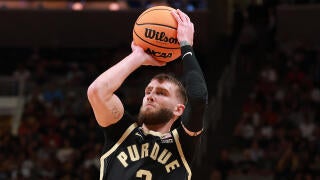 1:34
1:34Biggest Winners from the 2026 NBA Draft Second Round
-
 13:21
13:212026 NBA Draft: Round 1 Recap
-
 7:39
7:392026 NBA Draft: Round 1 Winners
-
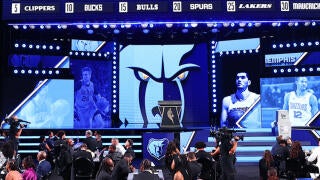 5:45
5:452026 NBA Draft: Round 1 Losers
-
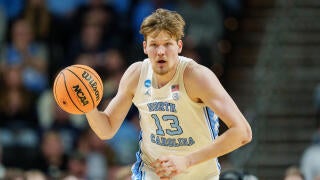 1:43
1:43The Surprise of Henri Veesaar at No. 52
-
 1:57
1:57Analyzing the Pistons' Isaiah Stewart Trade
-
0:48
NBA Draft grades: Hawks select Henri Veesaar at No. 52
-
 0:39
0:39NBA Draft Grades: Raptors Select Jaden Bradley No. 50 Overall
-
 0:49
0:49NBA Draft Grades: Kings' Select Emanuel Sharp No. 45 Overall
-
 1:03
1:03NBA Draft Grades: Boston Select Dillon Mitchell No. 40 Overall
-
 0:19
0:19JUST IN: Pistons Trade Isaiah Stewart for 3 Future 2nd-Round Picks
-
 1:33
1:33NBA Draft Grades: Nuggets Select Trevon Brazile No. 35 Overall
-
1:03
NBA Draft Grades: Timberwolves Select Isaiah Evans No. 33 Overall
-
 1:13
1:13NBA Draft Grades: Rockets Select Bruce Thornton No. 31 Overall
-
 14:41
14:41The Biggest Questions After Round 1 of the NBA Draft
-
 7:13
7:132026 NBA Draft: Round 2 Lookahead
-
 12:13
12:13NBA 2nd Round Mock Draft
-
 1:59
1:59What Darryn Peterson Brings to the Utah Jazz